
Last updated November 23, 2026
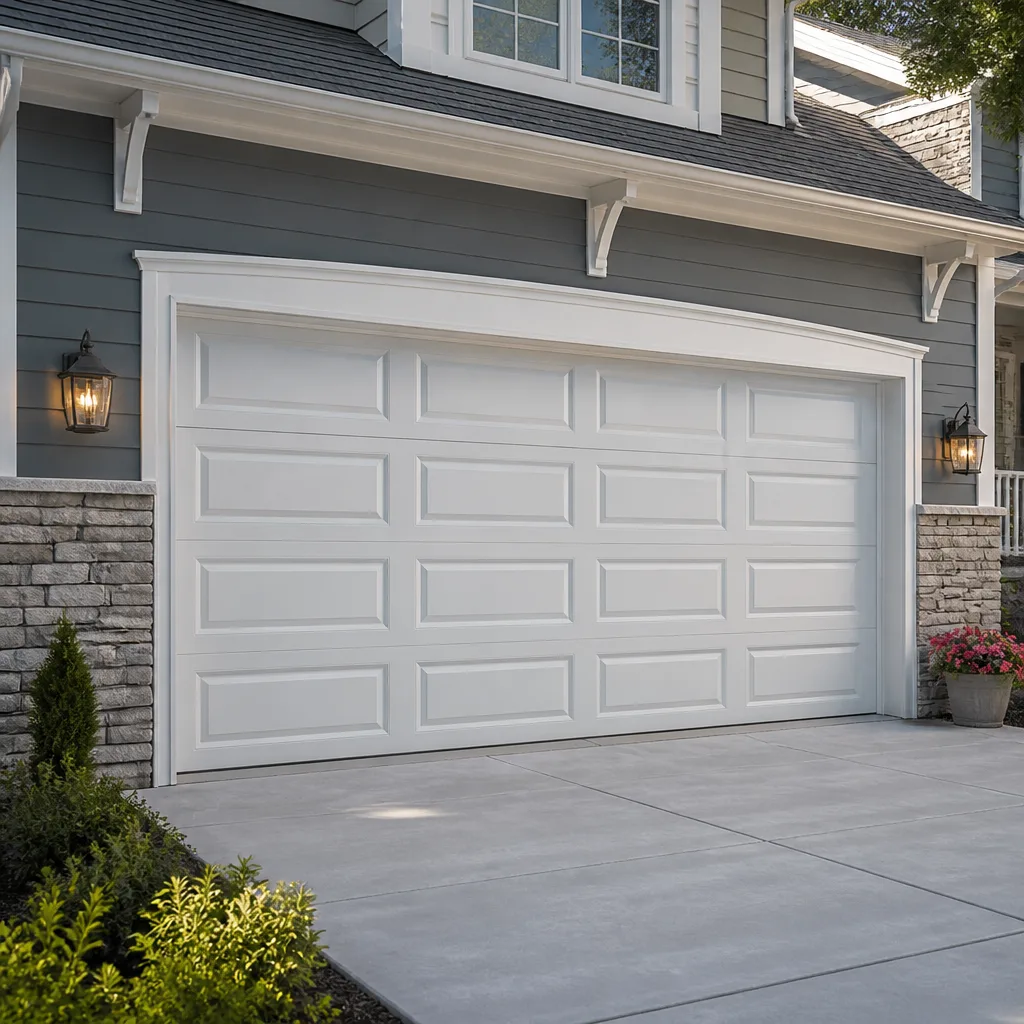 Raised-panel steel
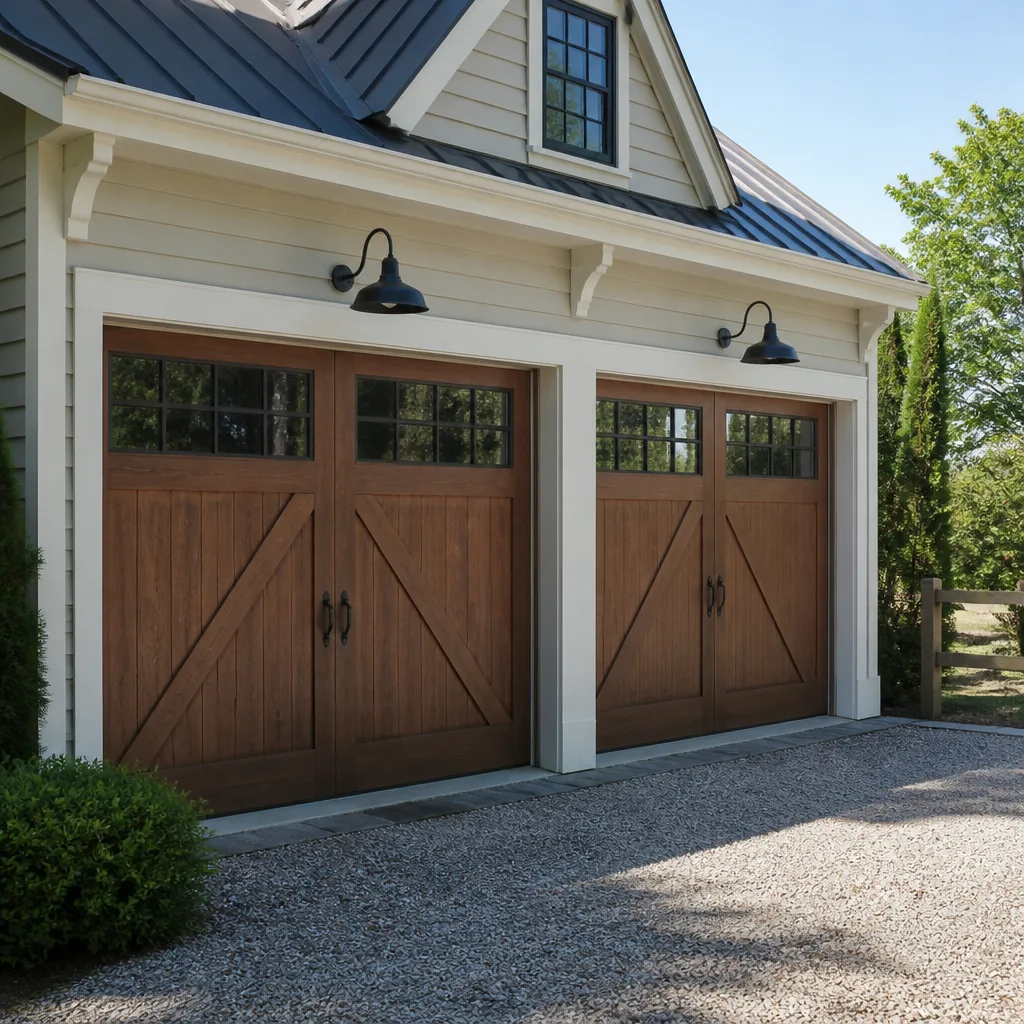 Carriage house
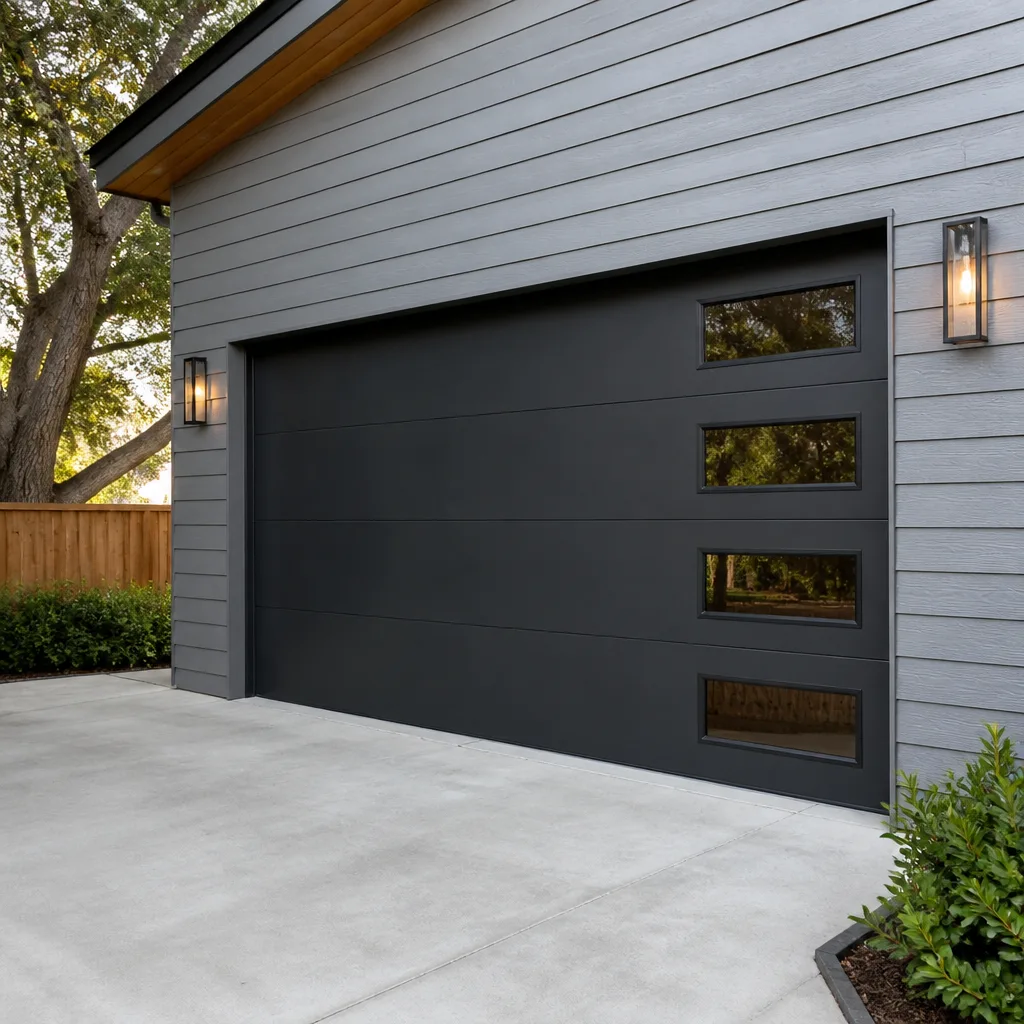 Modern flush
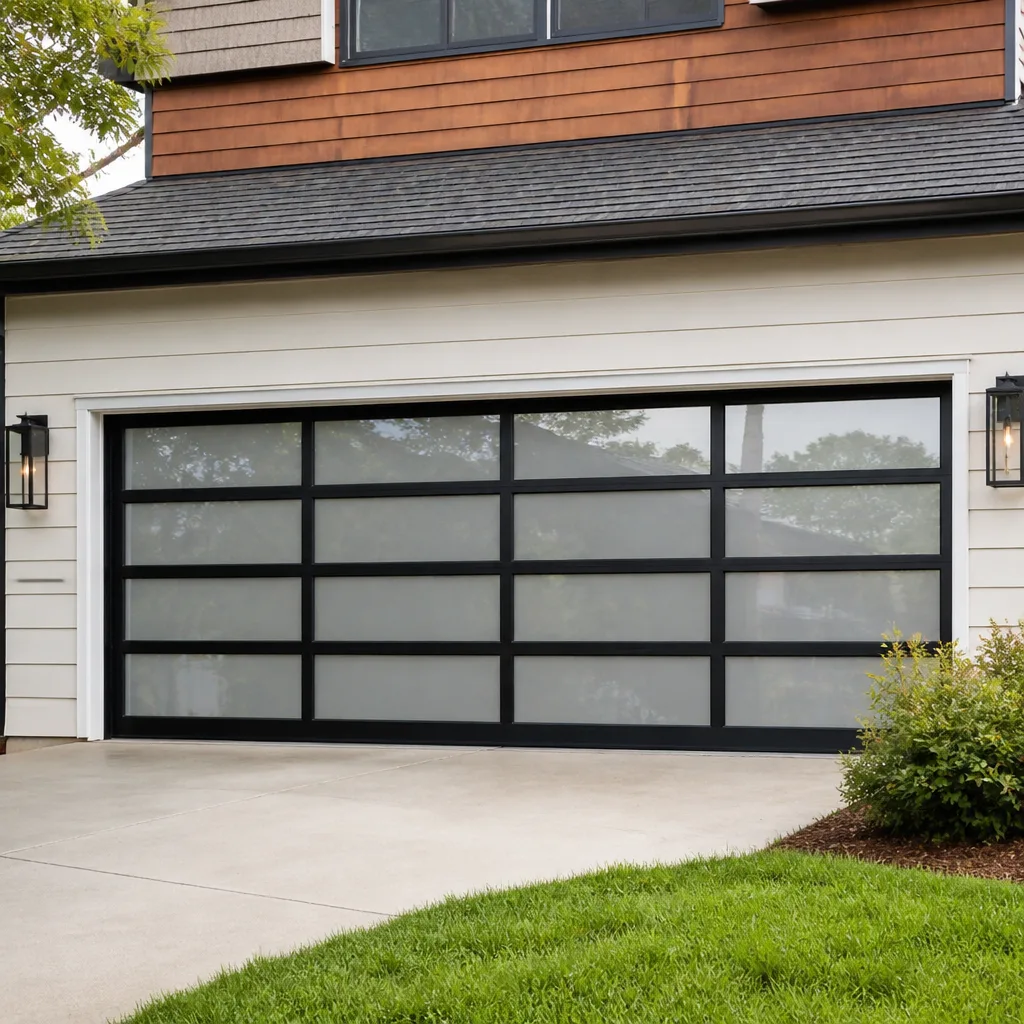 Full-view glass
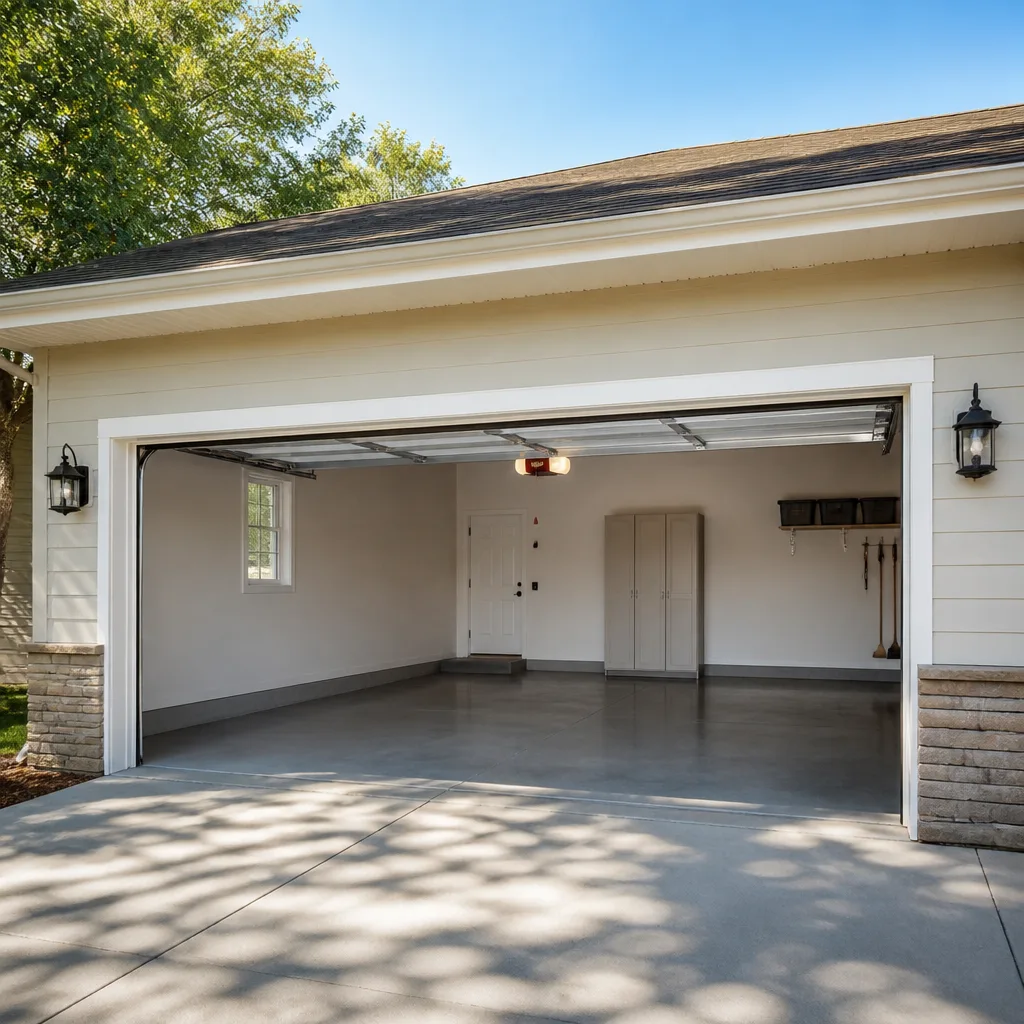 LiftMaster openers
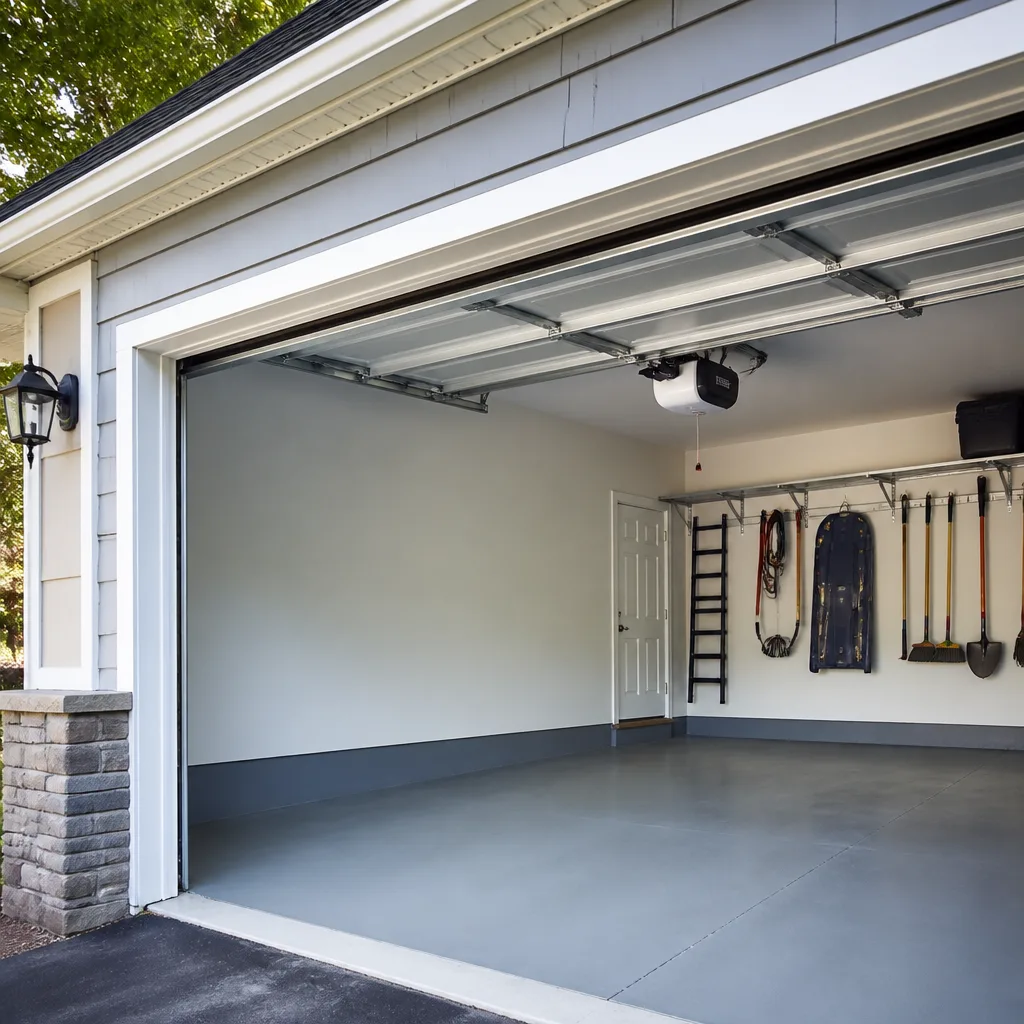 Chamberlain openers
Full 25-point door and opener safety check with every visit - springs, cables, rollers, tracks, and your LiftMaster or Chamberlain opener included
You get a price before we start. It does not change when the pro arrives.
Get your free estimateThe Complete Guide to Garage Doors in Pawtucket
Pawtucket has one of the highest concentrations of pre-1970 attached garages in New England, and that single fact explains most of the garage door problems we’re called out to here. The door, the opener, and the framing underneath were often installed in different decades by different people, and each upgrade left the next one working around it. A homeowner ends up with a 1990s opener bolted to a 1960s header, a door that was resized when a previous owner widened the opening, and springs that were chosen for a door that no longer exists. Generic garage door advice won’t help much with that. This guide walks through what actually matters in Pawtucket: how the housing stock shapes door sizing and spring work, which materials survive Rhode Island freeze-thaw cycles, which brands are already on your house, how to tell a real repair from a short-term workaround, and the permit rules most guides skip over.
Quick Answer
In Pawtucket, the biggest garage door issues come from old attached garages with mismatched components: doors, openers, and springs installed decades apart. Getting the door measured properly, choosing a material that handles freeze-thaw and humidity, and repairing springs, cables, and openers with the right parts matters more here than picking the fanciest new door. Call (866) 947-9783 for a free estimate on repair or installation.
Styles & brands we work with
- Raised-panel steel
- Carriage house
- Modern flush
- Full-view glass
- LiftMaster openers
- Chamberlain openers
Table of Contents
- How Pawtucket’s Housing Stock Changes Everything About Door Sizing
- Spring Configuration in Narrow and Older Garages
- Steel, Wood Composite, or Aluminum: What Holds Up in Rhode Island
- Which Brands You’ll Find in Pawtucket and What That Means for Parts
- Repair vs. Workaround: How to Tell the Difference
- Opener Repair and Replacement in Older Garages
- Permit Triggers in Pawtucket Most Guides Never Mention
- What Garage Door Work Costs in Pawtucket
How Pawtucket’s Housing Stock Changes Everything About Door Sizing
Walk through the residential neighborhoods of Pawtucket and you’ll see the pattern quickly: triple-deckers with shared driveways, capes and bungalows with narrow single-car garages, and occasional carriage-style outbuildings behind older homes. Very few of these garages were designed with today’s standard door widths in mind, and many have been modified at least once over the decades. That matters because garage door sizing isn’t just about the opening. It’s about headroom above the opening, side clearance for the track and torsion hardware, and the depth of the garage relative to the door’s travel.
What we run into most often in Pawtucket:
- Non-standard opening widths. A door that measures an inch or two off from the modern standard can’t take an off-the-shelf replacement without some adaptation. Measuring is a real step, not a guess from a tape photo.
- Reduced headroom. Low-ceiling garages (common in older attached structures) may need a low-headroom torsion setup rather than the standard configuration.
- Framing that’s moved. Decades of settling, plus previous upgrades to the opening, means the header may no longer be plumb or level. That affects how the door sits and how the track has to be shimmed.
- Shared or tight driveways. Where the door opens onto a narrow drive, the track placement and any extension into the apron matters more than it does in a newer subdivision.
If a homeowner calls about a replacement and hasn’t measured the opening correctly, the door that shows up won’t fit the first time. That’s why a free measure before ordering matters so much more in Pawtucket than it does elsewhere. When you’re ready for garage door repair or a replacement, the first step should always be a proper on-site measure, not a phone quote based on rough dimensions.
Spring Configuration in Narrow and Older Garages
Torsion springs and extension springs both show up in Pawtucket garages, and the choice between them in an older home is often dictated by the structure rather than preference. Low-ceiling garages tend to favor torsion setups because the spring sits above the door in the headroom area. Garages with adequate side clearance and higher ceilings may still have extension springs running along the horizontal tracks.
Here’s what matters for sizing and configuration:
- Door weight drives spring size. A door that’s been replaced with a heavier insulated model but kept its old springs is over-sprung or under-sprung, and both shorten spring life dramatically.
- Narrow garages restrict extension spring options. Extension springs need horizontal room. In tight single-car garages, torsion is often the only sensible layout.
- Cable drums must match the spring. If a previous upgrade swapped springs but not the drums, the system will bind and wear out fast.
- Spring work is genuinely dangerous. Torsion springs are under extreme tension and hold the full weight of the door. A trained technician uses specific winding bars and knows exactly how much tension the door needs. We handle garage door spring repair as a dedicated service for exactly this reason. Please don’t attempt spring or cable work yourself.
One more local point: Rhode Island’s temperature swings between winter and summer put repeated stress on springs. A spring that’s already near the end of its cycle life in a low-humidity climate tends to fail sooner here because the metal expands and contracts through many more cycles. If your door is 8 to 12 years old and the spring looks like it’s sagging or the door has gotten noticeably harder to lift, it’s worth a check before it snaps.
Steel, Wood Composite, or Aluminum: What Holds Up in Rhode Island
Pawtucket’s climate is hard on garage doors. Freeze-thaw cycles through winter expand and contract every panel and joint, and summer humidity softens wood and accelerates rust on cheaper steel. The material you choose should account for both, not just what looks good on a showroom floor.
- Steel: The most common choice in Pawtucket and for good reason. It’s affordable, holds up well against freeze-thaw if it’s properly finished, and doesn’t absorb moisture. The weak point is the bottom section, which takes on water from the driveway and can rust from the inside out. Look for a steel door with a rust-resistant bottom panel if you’re replacing.
- Wood composite: Holds up better than traditional wood because the composite resists moisture absorption, but it still needs more attention than steel. It suits older homes where a painted wood door matches the neighborhood character. Expect to repaint or reseal every few years.
- Aluminum: Lightweight and highly rust-resistant, which is useful in a humid climate. Not the best insulator, so it’s more suitable for detached garages or spaces where temperature control doesn’t matter. Also less rigid than steel, so on a wide door it may flex slightly more.
- Insulated vs. non-insulated: If the garage shares a wall with living space (common in Pawtucket’s older homes), an insulated door helps with noise and heat transfer far more than the material you pick.
Whatever material you choose, keep an eye on the bottom seal and the bottom panel. Those take the most abuse from road splash and standing water, and replacing them early is far cheaper than replacing the whole door later. Our Pawtucket Garage Door Repair team can help sort out which material makes sense for your specific garage, since the right answer depends on ceiling height, insulation needs, and how the door faces the weather.
Which Brands You’ll Find in Pawtucket and What That Means for Parts
If you live in an older Pawtucket home, the door on your garage is almost certainly one of a handful of brands. Clopay, Amarr, and Wayne Dalton show up most often in residential installations here, and Craftsman doors and openers are common wherever a previous owner did a DIY upgrade at a national retailer. Knowing which brand is on your door matters because it determines whether a repair is straightforward or whether parts need to be ordered.
What we typically see in Pawtucket:
- Clopay: Very common in this market, especially on mid-century and later homes. Replacement panels and hardware are generally accessible, so repairs tend to be straightforward.
- Amarr: Found on a mix of older and newer installations. Parts availability is solid; the challenge is matching the finish or panel style on an older door.
- Wayne Dalton: Shows up on some older homes and on doors installed in the 1990s and 2000s. Some older models have hardware that requires specific replacements, so getting the model right matters.
- Craftsman: Most often seen on openers rather than door panels. Openers sold under the Craftsman label were installed widely through retail channels, and many are still running in Pawtucket garages.
The practical takeaway: knowing the brand is the first question, not the whole answer. Get the model number if you can find it (usually on a sticker inside the door panel or on the opener’s motor housing), because that lets a technician tell you in one call whether the part is on the shelf or has to be ordered. Brand-agnostic service means we’ll tell you what will work on your door, even if it isn’t made by the same manufacturer that built it. For garage door opener repair, the brand question matters most because openers from different eras have real differences in rail design and force settings.
Repair vs. Workaround: How to Tell the Difference
Some “repairs” are real fixes. Others are patches that hold for a few weeks and leave the door worse than before. In Pawtucket’s older housing stock, this distinction comes up constantly because the door is often the newest thing on a garage with thirty-year-old framing – and a cheap fix that ignores the surrounding structure tends to come back around.
A genuine repair does all of these things:
- Fixes the cause, not just the symptom. A bent hinge usually means the door is out of balance, not that the hinge is defective. A snapped spring is often a symptom of the wrong spring size for the door’s weight. If the technician only replaces the part and doesn’t check the balance, the same failure will be back.
- Replaces in matched pairs where needed. If one spring is worn out, the other one is almost certainly at the same stage. Replacing only the broken spring means the second one fails shortly after, which is more expensive than doing both together.
- Restores the balance. A door should lift easily by hand and stay in place when partially opened. If it doesn’t after a repair, the springs aren’t sized correctly, or the cables and drums need adjusting.
- Accounts for the structure around it. Shimmed tracks, a corrected header, or a properly reinforced bottom bracket are all part of a real repair. Bending the track back by hand to squeeze the door past a framing issue is a workaround, and it shortens the door’s remaining life.
Signs you’re being handed a workaround:
- The technician adjusts the opener’s force setting rather than fixing the balance. Increasing force to overcome resistance strains the opener motor and the door hardware at the same time.
- Tracks are bent back into alignment rather than shimmed or replaced.
- The wrong size spring is used because it’s what was in the truck, not what the door’s weight needs.
- Only one spring is replaced on a pair.
A good rule for Pawtucket homeowners: if the door worked fine a year ago and now struggles, something changed. A real fix finds out what that was.
Opener Repair and Replacement in Older Garages
Garage door openers are the most-replaced component in Pawtucket garages, and it’s usually not because openers fail more often than doors. It’s because an opener installed in the 1990s may still be running a door that has since been replaced or resized, and the mismatch slowly wears out both.
What we see most in this market:
- Openers with photo-eye faults. A common no-opener symptom is the door going halfway down and reversing. Often the safety sensors are misaligned, dusty, or the garage’s lighting interferes with the beam. That’s a fixable problem, not a new-opener problem.
- Chain-drive units struggling with heavier doors. When a door is upgraded to an insulated steel model, the older chain-drive opener may still lift it but does so with strain. Belt-drive or heavier-duty chain models are usually the right replacement.
- Openers without modern safety features. Older openers may lack the auto-reverse function that’s standard today. Opener replacement is one of the few garage door upgrades where a newer unit genuinely matters for safety.
- Smart openers on wifi-hostile garages. If your garage is a separate structure in a back lot (common in some Pawtucket neighborhoods), a smart opener may not hold a strong signal. That’s a coverage question, not a defect.
Opener repair is worth its own call because the symptoms overlap: a door that won’t open could be the opener, the spring, the cable, or the tracks. Getting the diagnosis right the first time saves a return visit. We handle opener repair as a standalone specialty, covering the leading opener brands including LiftMaster, Chamberlain, Genie, Craftsman, and Raynor. You can call (866) 947-9783 for a free estimate on opener repair or replacement.
Permit Triggers in Pawtucket Most Guides Never Mention
General garage door guides rarely mention permits at all, but in Pawtucket they come up more often than you’d expect. The trigger isn’t the door itself, it’s the structural change around it.
Common scenarios where it’s worth calling:
- Enlarging or altering the garage opening. Widening or raising the existing opening means changing the header. That’s structural, and it typically requires a permit. Ask the city’s building department before you plan the door size.
- Adding an opener to a detached garage with a new circuit. If the electrical work is more than swapping an existing opener on the same circuit, it’s worth checking whether a permit applies.
- Converting a garage to living space. If your garage is becoming a finished room, the door situation changes entirely, and that’s a permitting process in itself.
- Replacing a door on a non-conforming garage. Pawtucket’s older neighborhoods have plenty of structures that predate current zoning. If the garage was originally built under different rules, check before you change the opening size.
Simple door replacement (same size, same opening) generally doesn’t require a permit, but rules do vary and the city’s building department is the right place to confirm. We won’t tell you whether a permit is required in your case, but we’ll flag it when a project steps into structural territory so you can make the call.
What Garage Door Work Costs in Pawtucket
Every garage door project is priced by written estimate after the door and opener have been measured and inspected. The ranges below reflect the general cost categories, not an offer or a fixed price, and the written estimate you receive sets the final number before any work starts.
| Service | Typical Range | Notes |
|---|---|---|
| Torsion spring replacement (one spring) | $180 – $340 | Most doors use a matched pair, replaced together, so double the range for both |
| Extension spring replacement (one spring) | $150 – $290 | Extension springs on older doors are also commonly replaced in pairs |
| Cable replacement | $150 – $350 | Usually paired with spring work; cable replacement alone is less common |
| Opener repair | $120 – $260 | Depends on whether the fault is the logic board, sensor, or drive system |
| New opener installation | $350 – $700 | Includes unit and install; smart and belt-drive units may price differently |
| New single-car door installation | $900 – $2,200 | Subject to size and material; standard opening |
| New double-car door installation | $1,400 – $3,200 | Subject to size, material, and insulation options |
The ranges shift based on the size of the door, the ease of access, whether the opening is standard, and whether the existing framing needs adjustment. A door on a Pawtucket garage with a non-standard opening or low headroom will often price toward the higher end because the door has to be measured and built for the specific opening rather than picked off a shelf. When you’re ready, the written estimate comes first, and the price you’re quoted is the price you pay. Estimates are free, and the fastest way to get one is a call to (866) 947-9783.
Common Mistakes to Avoid
- Replacing only the broken spring. On a door with a matched pair, the second spring is likely at the same stage. Replacing one leaves you paying for two separate service visits within a short period. It’s cheaper and safer to do both at once.
- Oversizing the opener to compensate for a balance problem. A strained door on a bigger motor is still a strained door. Force settings should never be dialed up to hide a spring or track problem.
- Buying a door based on showroom appearance without measuring the opening. Older Pawtucket garages have non-standard widths and headroom, and a door that looked right in the showroom can be an inch too wide for the actual opening.
- Assuming a permit isn’t needed because “it’s just the door.” A same-size swap usually doesn’t require one, but any change to the opening or header needs checking with Pawtucket’s building department. Most general guides skip this entirely.
- Treating low-headroom garages like standard ones. Ordering a standard door and track for a low-ceiling garage usually means modifying on site. Sorting out the configuration before the door is built saves the return visit.
- Letting a cable fray go unrepaired. A frayed cable is under the same tension as the spring. It’s a safety issue, not a cosmetic one, and it’s the kind of thing that shouldn’t wait for a convenient time.
- Overlooking the bottom panel and bottom seal. In a climate with freeze-thaw cycles year in and year out, the bottom of the door is where the failure starts. Addressing it early is far cheaper than replacing the whole door.
See the difference
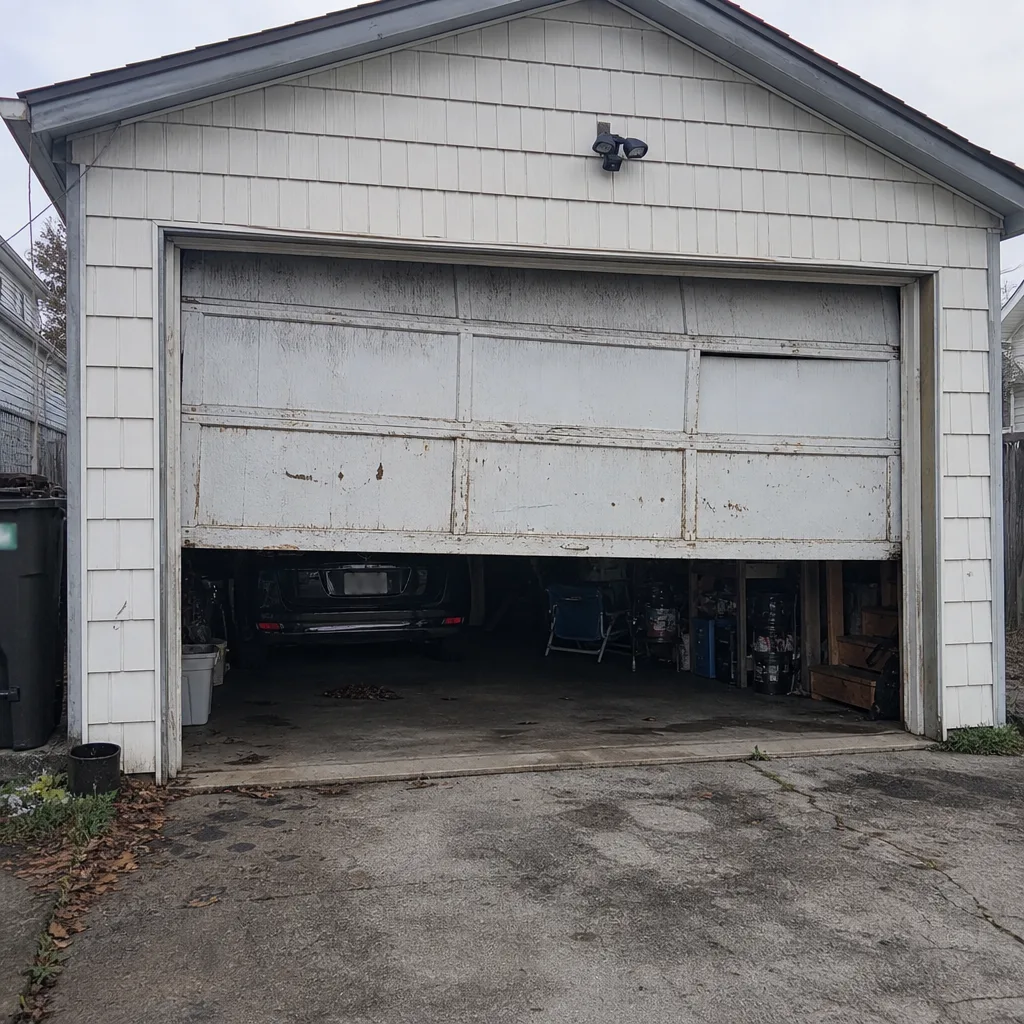 Before
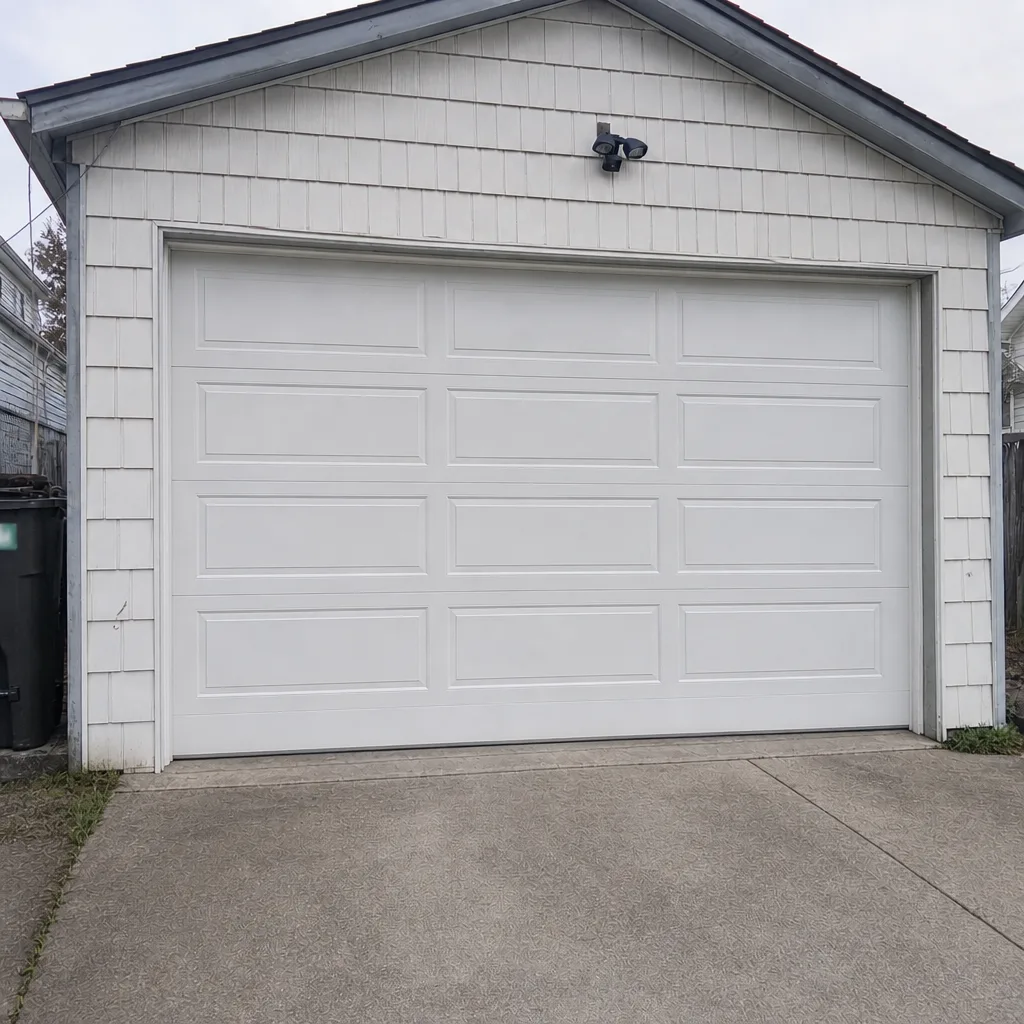 After
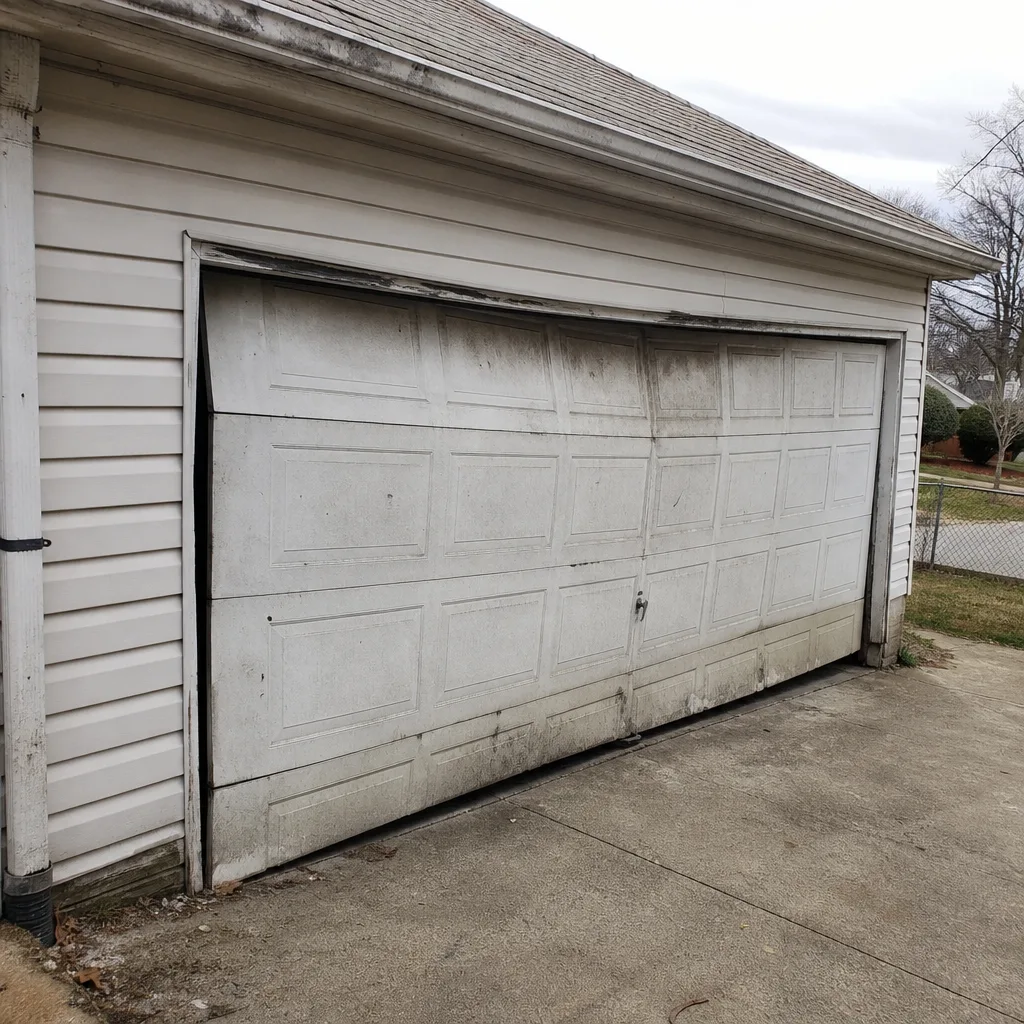 Before
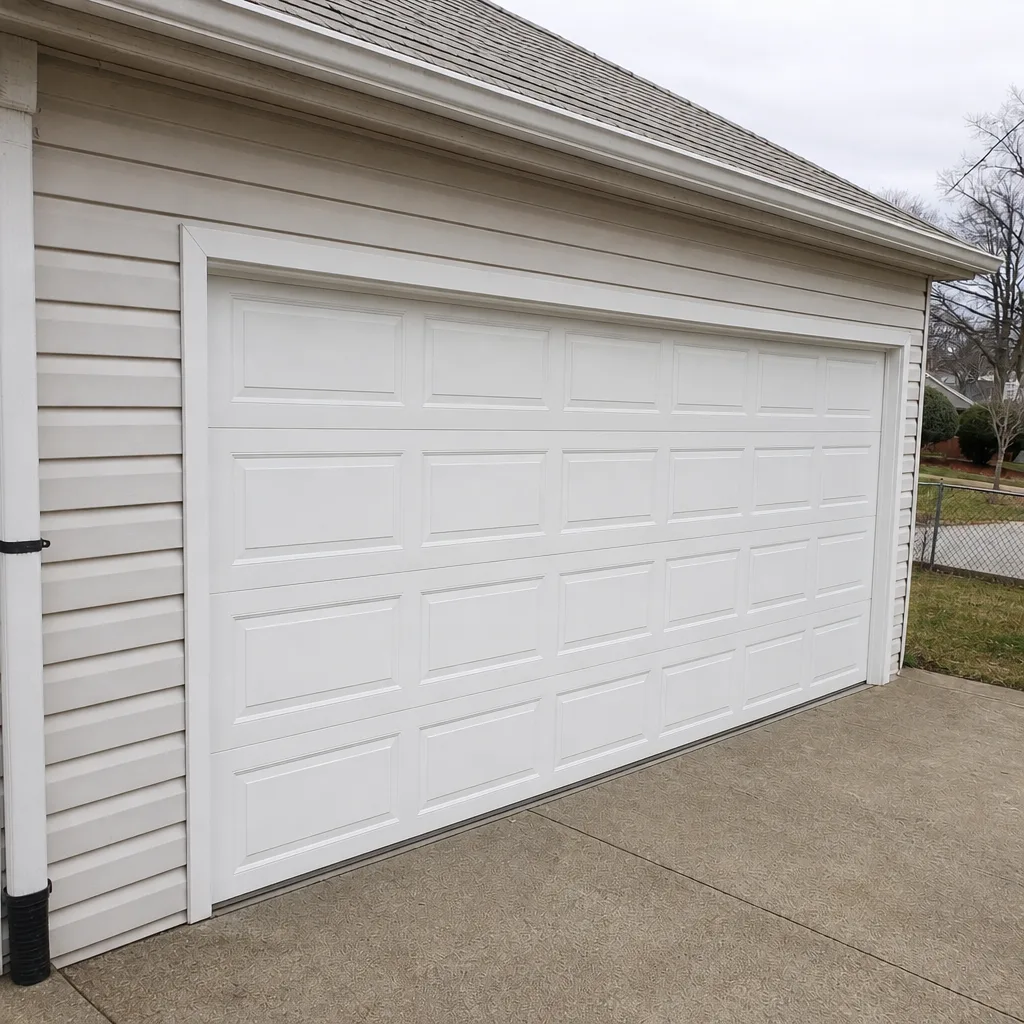 After
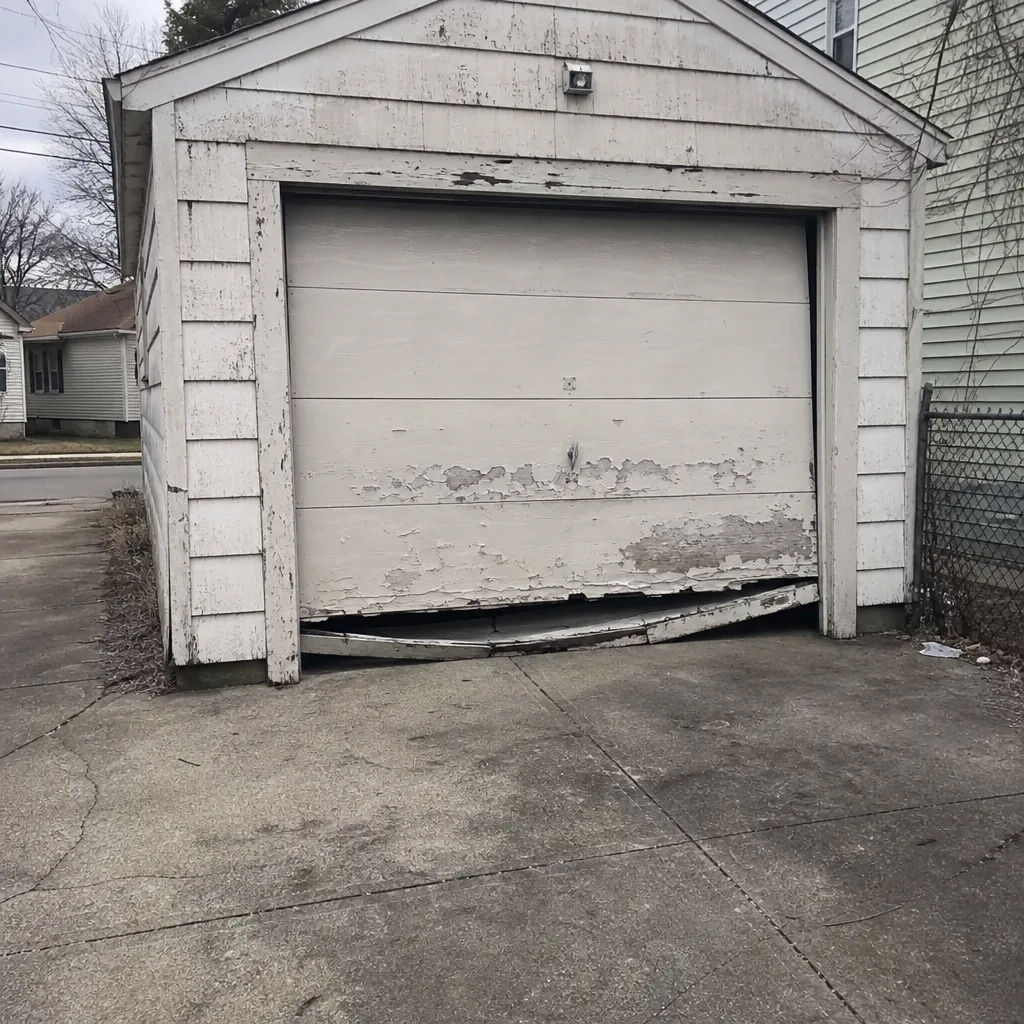 Before
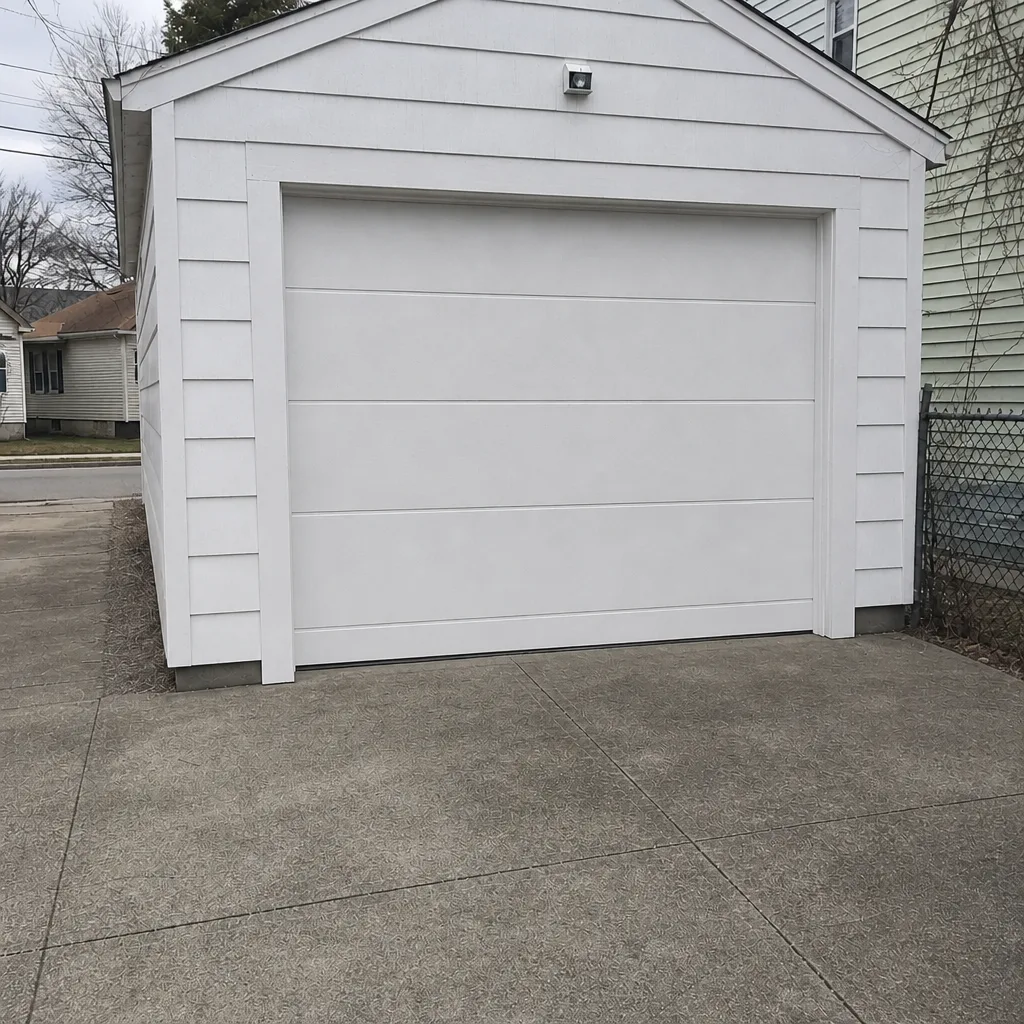 After
When to Call a Professional
Some garage door work is genuinely DIY-safe: tightening a bracket, cleaning the photo-eye lenses, replacing a weather seal, lubricating rollers. But springs, cables, tracks under load, and opener force settings are not, and in our experience, the repairs that go wrong tend to be the ones that look easy until they aren’t. Call us when the door is harder to lift than it used to be, when the spring has visibly snapped, when the door comes down at an angle, or when the opener cycles and nothing happens. Also call when you’re planning a replacement and the opening has changed size, or when the door hasn’t been serviced in years and you want to know whether it’s still safe. Pawtucket Garage Door Repair offers free estimates in Pawtucket – call (866) 947-9783. We answer 24/7. Fast dispatch from 7am to 7pm, Sunday through Friday.
Frequently Asked Questions
Torsion spring replacement typically runs $180 – $340 for a single spring, and extension springs typically run $150 – $290, with the written estimate setting the final price. Most doors have a matched pair, so the total is closer to double when both are replaced together – which is usually the right approach. Call (866) 947-9783 for an exact quote – estimates are free.
We handle same-day and emergency garage door service and can often be out the same day for a stuck door. Spring failures and opener failures top the list of same-day calls, but if the door is stuck open with a car trapped inside, we’ll do everything possible to prioritize it. Call (866) 947-9783. We answer 24/7. Fast dispatch from 7am to 7pm, Sunday through Friday.
No. The written estimate you receive before any work starts is the price. If the inspection turns up something that wasn’t visible from the initial call – a bent track, a worn drum, a frayed cable – that’s discussed with you first, and we don’t proceed until you approve the updated scope. Call (866) 947-9783 for a free estimate.
Yes – the local professional who comes to your home is state-licensed and insured as Rhode Island requires. Our technicians have up to 12 years of experience handling garage door repair and installation work. Call (866) 947-9783 with questions about credentials.
We service LiftMaster, Chamberlain, Genie, Clopay, Amarr, Wayne Dalton, Craftsman, and Raynor. That covers the vast majority of doors and openers installed in Pawtucket homes. If you’re not sure what brand you have, the model sticker is usually on the door panel or the opener’s motor housing. Call (866) 947-9783 with the model number and we can confirm service.
A same-size door replacement generally doesn’t require one, but any change to the opening or the header behind it typically does. Pawtucket’s building department is the right place to confirm, and it’s worth a call before you order a door sized differently than the original. Call (866) 947-9783 if you want to talk through the project scope first.
The Bottom Line
Pawtucket’s garage doors break in ways that general guides don’t prepare you for, because the housing stock and the climate are specific here. The door, the opener, and the framing underneath are often from different decades. The opening may not match the standard size. The material has to survive freeze-thaw cycles and summer humidity, and the springs have to match the actual door weight, not what once fit that opening. Getting the diagnosis right the first time, matching the repair to the actual brand and model, and treating springs and cables as the safety-critical components they are will save you the return visits and the short-lived workarounds. Whether you’re looking at repair, opener work, or a full replacement, one free estimate and one honest conversation usually answers the question.
Call (866) 947-9783 for a free estimate on any garage door or opener project in Pawtucket. We answer 24/7. Fast dispatch from 7am to 7pm, Sunday through Friday.
Written by the team at Pawtucket Garage Door Repair.